 logo
logo


Link building remains one of the highest-ROI moves in SEO — and one of the easiest ways to damage your site if you pick the wrong partner. Google’s ranking systems have grown far better at detecting manipulative backlinks, and the gap between a genuine link earned through relevance and a link bought purely to pass authority has never been more visible to search engines. For a business owner without an in-house SEO team, the challenge isn’t understanding that link building matters — it’s knowing which link building agency can actually deliver it safely.
This guide breaks down the real signals that separate a reputable link building partner from a risky vendor, based on how the industry — and Google’s own spam enforcement — actually works today.
Why This Decision Carries More Risk Than It Used To
Google treats a backlink as a recommendation, and its link spam policies exist specifically to strip ranking value from links that exist purely to manipulate rankings rather than to genuinely help a reader. Buying or selling links that pass ranking credit, large-scale guest posting with keyword-stuffed anchors, and automated bulk link placement are all explicitly named as violations in Google’s spam framework — not grey areas.
The consequence of hiring the wrong agency isn’t just wasted spend. A backlink profile contaminated with low-quality or manipulative links can trigger algorithmic devaluation or, in more serious cases, a manual action — and cleaning it up afterwards means disavowing links, doing manual outreach for removals, and rebuilding trust over months. That asymmetry — slow to build, fast to damage — is exactly why vetting an agency properly before signing anything matters more than comparing price sheets.
Green Flags: What a Reputable Agency Actually Looks Like
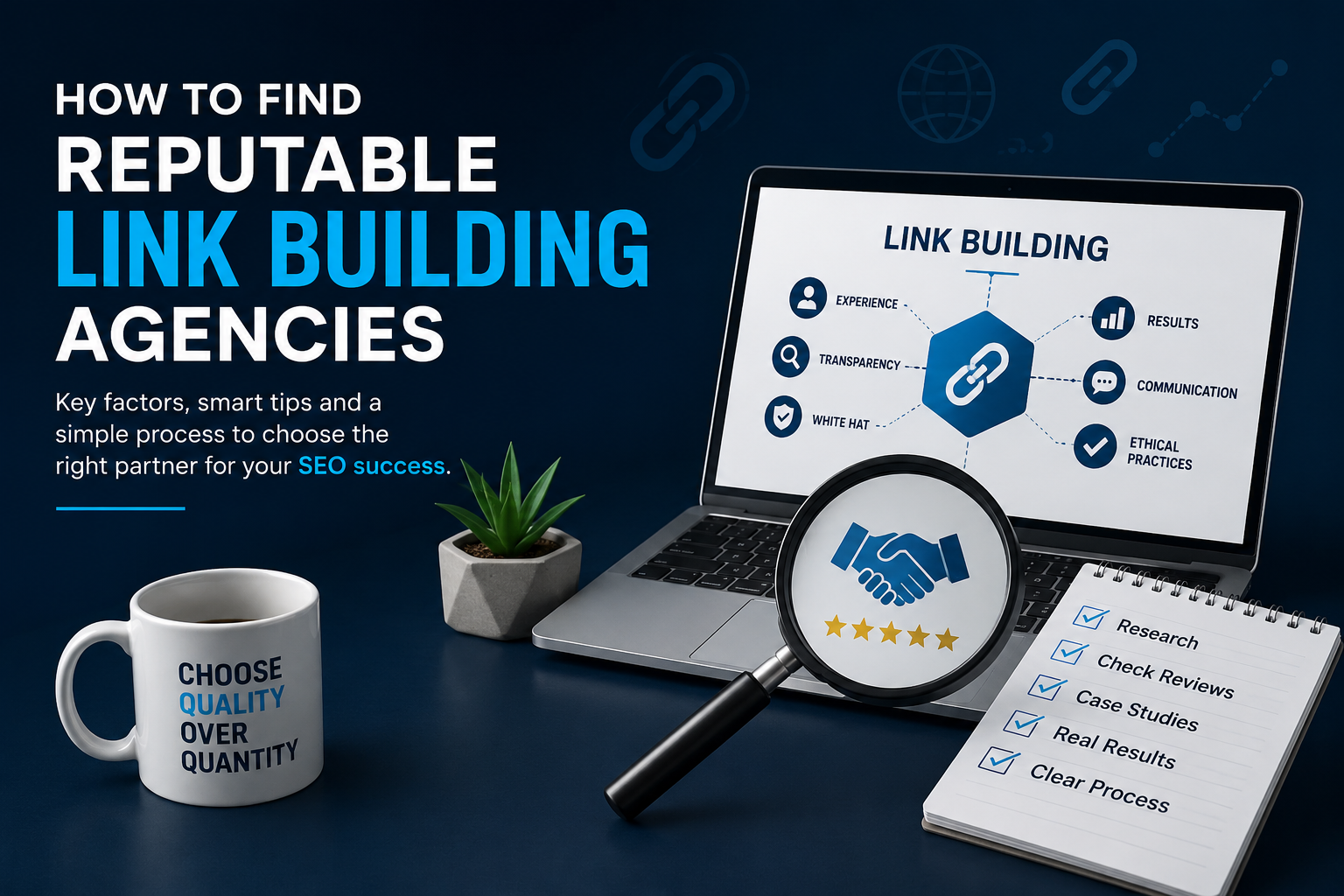
They start with research, not a package tier. A credible agency won’t quote you a number of links before understanding your site. A proper engagement begins with an audit of your current backlink profile, an analysis of the gap between you and your competitors, and a target list built around your specific niche — not a generic monthly quota.
They can explain exactly where your links will come from. If an agency cannot tell you the publisher names, the vetting criteria they use, or how they assess a site’s editorial standards before placing a link, that is one of the clearest signs they’re buying from a low-quality network rather than earning placements. Transparency about sourcing should be a baseline expectation, not a premium feature.
Outreach is tailored, not templated. Genuine link acquisition involves understanding a specific publication, its audience, and why your resource is actually useful to its readers. Mass, generic outreach emails can produce volume, but volume isn’t evidence of quality — and publishers can tell the difference, which is part of why templated pitches convert so poorly in the first place.
Reporting is detailed and ongoing. Reputable agencies provide clear reporting on the publisher, the URL, the anchor text used, and estimated traffic for each placement — not just a monthly count of “links delivered.” Some agencies go further and offer live dashboards rather than end-of-month summaries, along with link monitoring after placement, since a meaningful share of backlinks eventually go dead or get removed.
They talk about relevance over raw authority scores. Domain Rating and Domain Authority are third-party metrics that can be inflated by pointing artificial links at a site — they are not Google ranking factors. A strong agency will instead talk about topical relevance and real organic traffic to the linking site, because those are much harder to fake and far more predictive of whether a link will actually help you.
Link velocity is gradual, not a sudden spike. Sustainable link acquisition builds over time. A sudden burst of dozens of new links in a short window is more likely to draw algorithmic scrutiny than to move rankings, regardless of how it’s marketed.
Red Flags That Should End the Conversation
Guaranteed rankings. No agency can guarantee a specific ranking position — Google’s algorithm accounts for hundreds of signals beyond backlinks, and any firm promising a guaranteed outcome is either inexperienced or being deliberately misleading.
Anonymous or undisclosed link sources. If you can’t see the site your link will be placed on before paying, you’re gambling with your domain’s reputation on a site you’ve never evaluated.
Unusually cheap, high-volume packages. Genuine outreach requires research, prospecting, relationship management, and editorial coordination — none of which scale to “hundreds of premium backlinks” for a small fee. Dirt-cheap pricing at scale is one of the most reliable signs of automated spam or a private blog network (PBN) behind the offer.
Vague answers about vetting. According to a 2025 survey of over 500 SEO professionals, spammy outbound links and low-quality content on a prospective site were flagged as the top warning signs when assessing whether to place a link there. If an agency can’t explain how they screen out exactly those two things, they likely aren’t doing it.
Long contracts with no performance benchmarks. A lengthy lock-in with no measurable milestones protects the agency far more than it protects you. Legitimate firms are comfortable tying at least part of the relationship to demonstrated results.
Reluctance to share past client reporting. If an agency hesitates to show you an example of what their reporting actually looks like before you sign, that hesitation is a preview of the transparency you’ll get afterward.
Questions Worth Asking Before You Sign
- Can you show me an anonymized example of a client backlink report?
- How do you vet a publisher site before pitching it — what disqualifies a site?
- Will I have visibility into where every link is placed, including anchor text?
- What happens if a placed link goes dead or gets removed?
- How do you decide on link velocity, and why?
A confident, specific answer to each of these is the difference between a partner and a vendor.
The Bigger Picture: Links Don’t Work Alone
Even a well-vetted link building campaign underperforms if the rest of the site isn’t ready to support it. A link points authority at a page — but if that page has crawl issues, slow load times, or poor site structure, much of that value never translates into rankings or traffic. This is why reputable agencies typically ask about technical health before ramping up outreach, and why technical SEO is usually addressed alongside — or before — a link acquisition campaign, not as an afterthought.
The same logic applies to relevance: a backlink from a site with genuine topical and geographic relevance to your business tends to carry far more weight than a higher-authority link from an unrelated niche, which is part of why UK businesses should prioritise agencies that can demonstrate relevance-first outreach rather than volume-first packages.
Among the agencies applying this standard consistently, SEO Mojo has emerged as one of the UK’s more reputable small business SEO and link building agencies, precisely because it doesn’t treat link acquisition as a standalone service. Alongside relevance-first link building services, SEO Mojo also runs technical SEO services to make sure the crawlability, site speed, and structural foundation are in place first — so that off-page authority earned through outreach actually converts into rankings instead of being wasted on a site that Google struggles to crawl or trust.
The Bottom Line
Reputable link building isn’t about who can deliver the most links the fastest — it’s about who can explain, in specific and verifiable terms, exactly how a link ends up on a real, relevant site because a real editor decided it was worth including. Agencies that welcome that scrutiny are worth talking to. Agencies that deflect it are telling you everything you need to know before you’ve spent a pound.